In a landmark moment that has captured worldwide attention, Nicolás Maduro, the ousted president of Venezuela, made his first court appearance in the United States. The proceedings, held in a federal courthouse in New York City, marked an unprecedented legal confrontation: a former sovereign leader facing federal charges on foreign soil. The hearing underscored deep geopolitical tensions, legal controversies, and diplomatic fault lines that are shaping global responses.
Maduro, transported under heavy security to the Manhattan courtroom, entered the historic venue defiantly. Wearing prison attire and listening through Spanish language translation headsets, he looked directly at the judge and the packed room before delivering a bold message. In clear, unwavering terms, he stated that he was “innocent,” “not guilty,” and “still the president of my country.” His dramatic proclamation set the tone for a case that blends criminal justice with questions of international law and national sovereignty.
Read More: https://newsludo.com/starlink-under-siege-how-russia-might-challenge/
The Charges and Maduro’s Plea
At the start of the session, Maduro appeared alongside his wife, Cilia Flores, who also pleaded not guilty to the charges against her. The indictment accuses both of them of involvement in extensive drug trafficking, narco‑terrorism, and conspiracy to import drugs into the United States. These allegations form the core of the U.S. government’s case and have propelled the issue into the center of global attention.
Maduro’s defense strategy from the outset focused on challenging the legitimacy of his capture. He repeatedly insisted that his removal from Venezuela was not a lawful arrest but an act of “abduction” by U.S. forces. The former Venezuelan leader described his transfer to the United States as a forced extraction from his home — a characterization that has intensified debate over its legality and its implications for international norms.
Despite the gravity of the accusations, the tone Maduro struck in court was assertive. He declared himself a “decent man” and insisted that he remained Venezuela’s rightful leader, even as U.S. authorities regard him as a criminal defendant. His legal team signaled early that they plan to mount a vigorous defense, likely contesting the way he was taken into custody and arguing constitutional protections that typically accompany sovereign immunity.
The U.S. Government’s Position
U.S. officials presented the arraignment as a routine legal proceeding to hold powerful alleged offenders accountable under American law. In public statements outside the courtroom, representatives of the U.S. government emphasized that Maduro’s prosecution is rooted in long‑standing indictments tied to narcotics trafficking and related crimes. They maintained that the process adheres to established judicial procedures and underscores the principled rule of law.
Behind this legal narrative lies a broader political backdrop: the Trump administration has framed the operation as a key part of its broader strategy to counter drug trafficking and corruption. U.S. authorities contend that Maduro’s alleged actions have destabilized the region and inflicted harm on Venezuelan citizens over many years of governance. From this perspective, the decision to bring him to the United States to face trial reflects a commitment to accountability, even at the highest levels.
International Law and Diplomatic Backlash
The dramatic capture and subsequent transfer of Maduro to the United States have ignited fierce debate among governments, legal experts, and international institutions. At the heart of that discussion is the question: Can one country insert its law enforcement actions deep inside the sovereign territory of another without consent?
Many nations and influential voices argue that Maduro’s seizure may violate core principles of international law. These critics insist that sovereign immunity — the idea that a sitting head of state cannot be prosecuted by a foreign government — is central to diplomatic relations and must be respected to preserve global order. They view the operation as a dangerous precedent, fearing it could open the door for future unilateral actions by powerful countries against their rivals.
This concern was echoed in emergency sessions convened by global bodies to address the incident. At these meetings, member states expressed alarm and called for adherence to the United Nations Charter, which prohibits one nation from using force against another without explicit authorization or consent. Many representatives emphasized that while accountability is vital, it cannot come at the expense of legal norms that underpin international cooperation.
United Nations: A Divided Response
The United Nations has become a key arena for competing narratives surrounding Maduro’s arrest and legal proceedings. During emergency Security Council sessions, diplomats expressed sharply divided views. Some delegations condemned the operation as a breach of international law, labeling it an unlawful act that undermines the global legal framework. These critics urged a return to diplomatic channels and negotiation, rather than military intervention.
On the other hand, certain Western delegates acknowledged the complexity of the situation without fully endorsing the U.S. approach. They stressed the need for a balanced application of international law while noting concerns about the long‑standing humanitarian and political crisis in Venezuela. These officials stopped short of condoning the means of Maduro’s capture but recognized the deep outrage surrounding his government’s record on corruption and human rights abuses.
The result has been a fractured global response, with some countries staunchly defending sovereignty and others focusing on Maduro’s controversial leadership record. This schism highlights broader tensions within international institutions about how to balance accountability with respect for sovereignty.
Venezuelan Politics: Power Shifts and Internal Reactions
Back in Venezuela, the political landscape has shifted rapidly since Maduro’s removal. The country’s National Assembly and Supreme Court have taken steps to designate Delcy Rodríguez as interim president, a move intended to maintain continuity and counter the narrative that Maduro’s authority has been extinguished.
In a powerful address to the Assembly, Maduro’s son expressed unconditional support for Rodríguez, calling on the international community to engage with Venezuela constructively during this turbulent period. His remarks underscored the determination of Maduro’s supporters to maintain political relevance and challenge the legitimacy of the U.S. action.
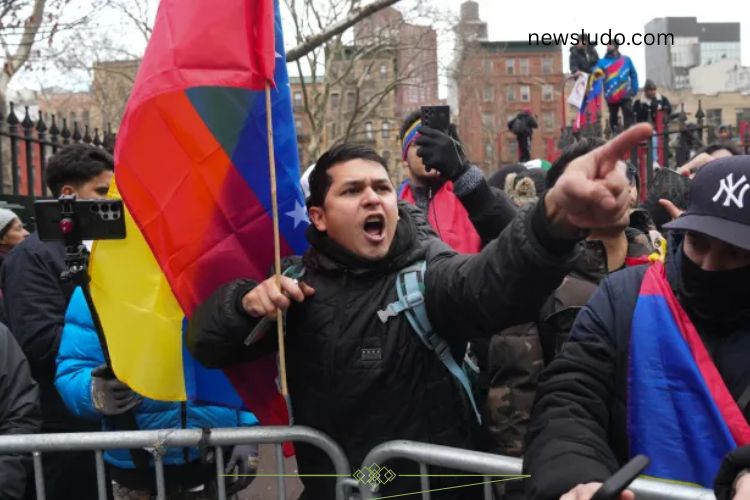
Within Venezuela itself, reactions have been mixed. Some applaud Maduro’s insistence that he remains the legitimate leader and view the U.S. action as an affront to national sovereignty. Others are less supportive, recalling years of economic collapse, political repression, and social hardship under Maduro’s rule. This internal divide mirrors the broader geopolitical split playing out on the world stage.
Reactions from Around the World
Global leaders have weighed in with a spectrum of responses. In Latin America, some heads of state condemned the U.S. operation and voiced solidarity with Venezuela’s sovereignty. These leaders emphasized non‑interference and respect for established diplomatic norms.
European capitals expressed caution, urging the U.S. to justify its actions within the framework of international law, and calling for transparency and legal clarity as the case progresses. They highlighted that the implications of this incident extend far beyond Venezuela’s borders and could reshape norms governing international conduct.
In contrast, several nations in the Global South condemned the intervention outright, portraying it as neo‑imperialist and dangerous. They stressed that powerful countries should not exploit legal mechanisms to target foreign leaders and underscored the need for multilateral dialogue to resolve conflicts.
Frequently Asked Questions:
What happened at Maduro’s U.S. court appearance?
On January 5, 2026, Nicolás Maduro appeared in a federal court in New York after being apprehended by U.S. forces. During the hearing, he pleaded not guilty to federal criminal charges and repeatedly insisted he remains Venezuela’s legitimate president.
What charges is Maduro facing?
Maduro is charged with federal drug trafficking and related offenses, including allegations involving cocaine importation and conspiracy. Prosecutors also accuse him of conspiracy and other serious crimes linked to narcotics operations.
How did Maduro respond when asked to enter a plea?
Through an interpreter, Maduro stated: “I am innocent, I am not guilty, I am a decent man, I am still president of my country.” He also claimed he had been “captured” and described himself as “kidnapped” by U.S. forces.
Did Maduro’s wife appear in court too?
Yes. Cilia Flores, Maduro’s wife, also appeared and pleaded not guilty to the federal charges alongside him.
What did Maduro claim about how he was taken into custody?
Maduro asserted that he was taken from his home in Caracas in a U.S. military operation and repeatedly emphasized that he was seized, calling his situation a form of abduction rather than a lawful arrest.
Is Venezuela’s government still functioning?
While Maduro insists he remains president, other political figures in Venezuela have acted to fill the leadership vacuum. Delcy Rodríguez was sworn in as interim president in the wake of his capture, highlighting a political power shift within Venezuela.
What’s next in the legal process?
The judge set a follow‑up court date for March 17, 2026, where more hearings will determine how the case proceeds. Neither Maduro nor Flores sought bail at the initial appearance.
Conclusion
Nicolás Maduro’s dramatic U.S. court appearance marks an unprecedented chapter in international law and geopolitics. His defiant plea of “I’m still president” underscores the deep political and legal tensions surrounding his capture, the legitimacy of U.S. actions, and the ongoing crisis in Venezuela. While Maduro faces serious federal charges, the proceedings have sparked intense debate over sovereignty, diplomatic norms, and the rule of law. Globally, reactions remain divided, reflecting the broader struggle between accountability and respect for national authority. As the legal process unfolds, the world watches closely, aware that the outcome will have far-reaching consequences for Venezuela, U.S.-Latin America relations, and the principles guiding international justice.