
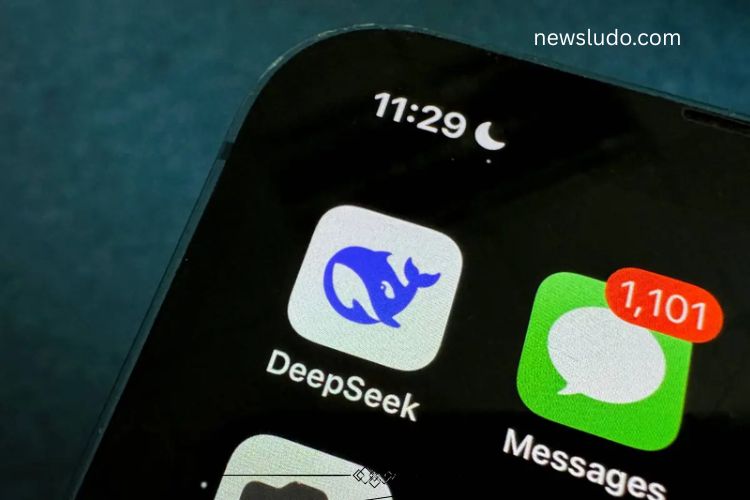
DeepSeek, the AI chatbot app from China, has recently gone viral, topping charts on the Apple App Store and Google Play. Its rise has caught the attention of tech enthusiasts, Wall Street analysts, and AI professionals alike, sparking debates about whether the U.S. can maintain its lead in the AI arms race and if the demand for AI chips will continue to surge.
Read More: https://newsludo.com/analog-computers-uncovered-your-easy-must-know/
Origins of DeepSeek
DeepSeek began as an offshoot of High-Flyer Capital Management, a Chinese quantitative hedge fund leveraging AI for trading. Liang Wenfeng, an AI enthusiast and co-founder of High-Flyer, launched the fund in 2019 after experimenting with trading during his studies at Zhejiang University.
In 2023, High-Flyer established DeepSeek as a dedicated AI research lab, separate from its financial operations. With High-Flyer’s backing, the lab eventually spun off into its own company. From the outset, DeepSeek invested in building its own data center clusters to train models, although U.S. export bans on advanced hardware presented challenges. For instance, some recent models had to be trained using Nvidia H800 chips, a slightly less powerful alternative to the H100 chips.
A Young and Diverse Technical Team
DeepSeek’s workforce is notably young and dynamic. The company recruits doctorate-level AI researchers from top Chinese universities while also bringing in professionals with no computer science background to enhance the AI’s contextual understanding across diverse subjects. This unusual combination has contributed to DeepSeek’s innovative approach to AI development.
DeepSeek’s AI Models
Early Models: DeepSeek Coder and LLM
The company launched its first models — DeepSeek Coder, DeepSeek LLM, and DeepSeek Chat — in November 2023. These early models laid the foundation, but it wasn’t until the release of the DeepSeek-V2 family that the company began to draw significant industry attention.
DeepSeek-V2: A Game-Changer
The DeepSeek-V2 models combined text and image analysis capabilities in a general-purpose system. They outperformed many domestic competitors and were far cheaper to run than comparable AI systems. This forced rivals like ByteDance and Alibaba to lower prices or make some models free.
DeepSeek-V3 and R1: Leading the Pack
December 2024 saw the release of DeepSeek-V3, further cementing the company’s reputation. Internal benchmarks suggested that DeepSeek V3 surpassed models like Meta’s LLaMA and OpenAI’s GPT-4o in various tasks.
Another breakthrough, the R1 reasoning model released in January, could self-verify outputs, improving reliability in scientific, mathematical, and physics domains. While reasoning models take longer to generate responses, their accuracy and consistency make them highly valuable.
However, DeepSeek’s models face restrictions imposed by Chinese regulators. The AI must comply with guidelines ensuring responses “embody core socialist values.” For example, R1 avoids questions on topics like Tiananmen Square or Taiwan’s autonomy.
Growing Popularity and Developer Adoption
Despite these limitations, DeepSeek rapidly gained users. By March, it reached 16.5 million visits. While still smaller than ChatGPT’s 500 million weekly active users, its growth was noteworthy. The company released updates to its models, including the R1 on Hugging Face, allowing developers to create derivative models under permissive licenses. Over 500 derivative R1 models collectively accumulated 2.5 million downloads, demonstrating significant community engagement.
Disruptive Business Model
DeepSeek’s business strategy is unconventional. It prices products far below market value, often giving them away for free, and currently declines outside investment despite strong VC interest. The company claims cost efficiency enables this approach, though some experts question the figures.
This affordability has made DeepSeek highly attractive to developers and startups, enabling experimentation and derivative projects. Hugging Face CEO Clem Delangue highlighted the active developer community built around DeepSeek’s models.
Industry Reactions
DeepSeek’s rapid rise has disrupted established players:
- Nvidia: The company’s stock dipped by 18% in January, partly due to DeepSeek’s impact on chip demand.
- OpenAI: CEO Sam Altman publicly acknowledged DeepSeek, warning about potential national security implications.
- Microsoft: Integrated DeepSeek into Azure AI Foundry, emphasizing enterprise utility.
- Meta: CEO Mark Zuckerberg reaffirmed AI infrastructure as a strategic priority despite DeepSeek’s competition.
Some governments and companies, however, have restricted DeepSeek usage over security and propaganda concerns. South Korea, New York state, and Microsoft’s internal policies all reflect caution against the AI’s influence.
Technological Advantages
DeepSeek models are known for their efficiency and cost-effectiveness, particularly in long-context operations. The experimental V3.2-exp model, released in September, reduced inference costs significantly.
Additionally, DeepSeek’s reasoning models have been praised for their ability to self-verify outputs, providing more reliable results than typical AI models. These strengths position DeepSeek as both a practical tool for developers and a disruptive force in AI innovation.
Controversies and Challenges
DeepSeek faces scrutiny due to:
- Regulatory compliance: Chinese-developed AI must adhere to domestic content regulations.
- U.S. government restrictions: Potential bans on government devices, citing national security concerns.
- Public perception: Critics describe its meteoric rise as “over-hyped,” though its impact on established players is undeniable.
While some praise the company’s innovation, others worry about geopolitical implications and the influence of state-supported technology.
Frequently Asked Questions:
What is DeepSeek?
DeepSeek is a Chinese AI chatbot app designed to provide advanced text and image analysis. It combines reasoning capabilities with conversational AI to deliver accurate, reliable, and context-aware responses.
Who developed DeepSeek?
DeepSeek was created by a team spun off from High-Flyer Capital Management, a Chinese AI-focused hedge fund. It was co-founded by AI enthusiast Liang Wenfeng and backed by innovative technical talent from top universities.
How is DeepSeek different from ChatGPT?
Unlike ChatGPT, DeepSeek offers reasoning models that can self-verify answers, making it more accurate in science, math, and technical domains. It is also designed to run more efficiently, reducing operational costs.
Is DeepSeek free to use?
Many DeepSeek tools are available for free or at a very low cost, making it accessible to developers, businesses, and tech enthusiasts. Some advanced models are available under permissive licenses for commercial use.
Can DeepSeek handle sensitive topics?
DeepSeek’s responses are regulated under Chinese content guidelines. It avoids answering topics related to political sensitivity, such as Tiananmen Square or Taiwan’s autonomy.
What industries can benefit from DeepSeek?
DeepSeek is versatile: developers, tech startups, finance professionals, educators, and research institutions can use it for coding, AI experimentation, data analysis, and general AI applications.
How accurate is DeepSeek?
DeepSeek’s reasoning models, like R1, can self-verify outputs, making them highly reliable in technical domains compared to standard AI models.
Conclusion
DeepSeek has emerged as a groundbreaking force in the AI landscape, combining cutting-edge technology with innovative reasoning models that set it apart from competitors. From its roots in a Chinese hedge fund to global recognition, the app demonstrates how strategic talent, advanced research, and efficiency breakthroughs can rapidly propel a startup to prominence. While regulatory and geopolitical factors may shape its accessibility, DeepSeek’s impact on developers, businesses, and the AI industry is undeniable.