Washington is entering a risky new phase in its Venezuela strategy following the dramatic removal of President Nicolás Maduro. Rather than deploying large numbers of U.S. ground forces, the Trump administration appears to be relying on intimidation, military pressure, and economic leverage to force Venezuela’s remaining leadership into compliance. The approach reflects a belief inside the White House that fear of further strikes—and personal consequences—can bring Caracas in line with U.S. demands.
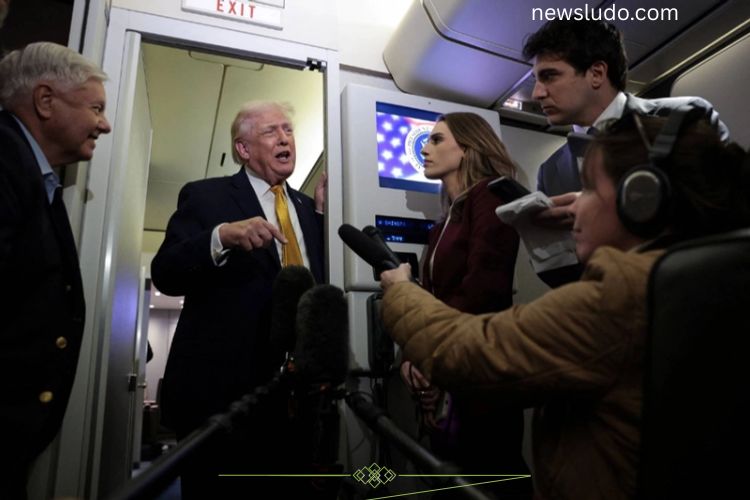
President Donald Trump made that position clear during remarks aboard Air Force One, warning that additional military action remained firmly on the table. His message was blunt: cooperation would bring stability and engagement, while resistance could trigger consequences even more severe than those faced by Maduro himself.
Read More: Historic Triumph: Zohran Mamdani Shines as New York City’s First Muslim Mayor
Military Threats as a Tool of Diplomacy
Trump’s public warning of a possible “second strike” underscores how central military pressure has become to U.S. strategy. While the administration has avoided committing to a ground invasion, it continues to emphasize air power, naval presence, and targeted operations as leverage over Venezuela’s interim government.
Asked whether U.S. troops could eventually be deployed for peacekeeping purposes, Trump left the door open, saying any decision would depend on the actions of the government now led by interim President Delcy Rodríguez. The ambiguity appears intentional, designed to keep Venezuelan leaders uncertain and cautious.
Behind the scenes, U.S. officials believe uncertainty itself is a powerful weapon. The lack of clarity over Washington’s red lines keeps pressure on Caracas without forcing the White House into politically costly commitments at home.
Delcy Rodríguez Signals a Softer Tone
Following Maduro’s capture, Delcy Rodríguez struck a noticeably more conciliatory tone toward Washington. In a public statement, she called for cooperation between the two countries, emphasizing shared development goals and respect for international law. The language marked a shift from the outrage expressed by Venezuelan officials in the immediate aftermath of Maduro’s detention.
Rodríguez’s comments suggest an effort to de-escalate tensions while keeping channels open. As both interim president and oil minister, she occupies a uniquely influential position at a moment when Venezuela’s economic survival depends heavily on energy exports and infrastructure repair.
U.S. officials see Rodríguez as a pragmatic technocrat rather than a hardline ideologue. That perception has fueled hopes in Washington that she could serve as a workable partner during a transitional phase.
Oil, Infrastructure, and Strategic Access
At the heart of U.S. demands lies Venezuela’s oil sector. Trump has openly stated that Washington expects full access for U.S. authorities and private companies to the country’s struggling energy infrastructure, as well as to roads, bridges, and ports that have deteriorated after years of mismanagement.
For the Trump administration, cooperation on oil represents both economic opportunity and geopolitical influence. Venezuela holds some of the world’s largest proven crude reserves, and restoring production could reshape global energy markets while reducing dependence on rival suppliers.
Trump has framed this access as non-negotiable. He warned that refusal could place Rodríguez and her government in a position “worse than Maduro,” a remark widely interpreted as a personal threat aimed at forcing compliance.
Amnesty, Exile, and Internal Fractures
Washington’s strategy may also include quiet incentives. One option reportedly under consideration involves offering amnesty or safe exile to members of Maduro’s inner circle willing to cooperate. Maduro himself rejected such offers before his capture and now faces prosecution in the United States on drug-related charges.
However, two powerful figures remain wild cards: Defense Minister Vladimir Padrino and Interior Minister Diosdado Cabello. Both control key elements of Venezuela’s military and intelligence services and both face substantial U.S. bounties. Their loyalty—or resistance—could determine whether Rodríguez is able to consolidate authority.
Any attempt to sideline these figures risks internal instability, yet leaving them in place limits Washington’s ability to shape outcomes. That tension highlights the fragility of the current moment.
Political Constraints Inside the United States
Trump’s aggressive posture faces obstacles at home. While Republicans largely support a hard line on Venezuela, Democrats are expected to push back against funding for additional military operations. A bipartisan effort to restrict future interventions could limit the administration’s room to maneuver.
Public appetite for another overseas conflict remains low, especially one that could evolve into a prolonged occupation. Trump appears aware of these constraints, which may explain his preference for pressure and intimidation over boots on the ground.
For now, Washington’s goal appears to be influence without ownership—control without formal occupation.
A Strategy Built on Fear and Presence
U.S. officials believe they can extract cooperation by maintaining a visible military buildup off Venezuela’s coast. Fighter jets, naval assets, and surveillance flights serve as constant reminders of American power. Airstrikes that damaged Venezuela’s air defense systems have only heightened that sense of vulnerability among remaining leaders.
Economic pressure reinforces the military threat. Continued restrictions on Venezuelan oil shipments deprive the government of its primary source of revenue. Combined, these measures form what one official described as a “sword hanging overhead,” ready to fall if cooperation falters.
The approach is calculated to avoid escalation while keeping Caracas boxed in.
Competing Narratives Inside Venezuela
Venezuelan officials have publicly denounced Maduro’s capture as a kidnapping and accused the United States of attempting to seize control of the nation’s oil wealth. They insist the leadership remains united and reject claims that Washington can dictate terms.
Rodríguez, despite her pragmatic reputation, has previously pushed back against U.S. assertions that she is willing to collaborate. American officials, however, have downplayed her public rhetoric, signaling that actions matter more than statements.
The disconnect highlights the delicate balance Rodríguez must strike between appeasing Washington and maintaining legitimacy at home.
Democracy Takes a Back Seat
Notably absent from Trump’s public comments has been any sustained emphasis on restoring democracy. The administration has shown little interest in working with opposition figures, including internationally respected leaders seen as credible alternatives to Maduro’s movement.
Instead, U.S. messaging has focused on stability, security, and energy access. Critics argue this approach prioritizes resources over reform and risks entrenching a new version of the same power structure Washington claims to oppose.
Trump’s dismissal of opposition involvement has disappointed many Venezuelans who hoped Maduro’s removal would open the door to genuine political change.
Historical Echoes and Regional Risks
The United States has not intervened so directly in Latin America since the invasion of Panama nearly four decades ago. That precedent looms large in regional memory and fuels accusations of neocolonialism from critics across the political spectrum.
Trump has offered little detail on how Washington would “run” post-Maduro Venezuela, a phrase that sparked immediate backlash. Even some supporters worry such rhetoric could alienate allies and strengthen anti-American sentiment in the region.
Inside the U.S. government, Trump’s remarks reportedly caught parts of the State Department off guard. No concrete plans exist to staff an expanded diplomatic presence in Caracas, underscoring how improvised the strategy remains.
A Fragile Endgame
Trump’s Venezuela policy rests on a narrow path. Too much pressure could provoke resistance or collapse, while too little might allow old power networks to regroup. The administration appears determined to test whether fear, economic leverage, and selective engagement can achieve what diplomacy alone could not.
Whether that gamble succeeds will depend on Rodríguez’s ability to navigate internal threats, Washington’s willingness to restrain escalation, and the Venezuelan people’s response to a transition shaped largely from abroad.
Frequently Asked Questions:
What is Trump’s high-stakes power play in Venezuela?
Trump’s strategy centers on using military pressure, economic sanctions, and political intimidation to force Venezuela’s interim leadership to comply with U.S. demands without deploying large ground forces.
Why is the United States pressuring Venezuelan leaders?
Washington aims to secure political influence, stabilize the region, and gain access to Venezuela’s oil infrastructure while pushing for a controlled transition away from Maduro-era governance.
How is intimidation being used as a political tool?
The U.S. is leveraging threats of further military strikes, continued oil restrictions, and potential targeting of Maduro loyalists to create fear-driven compliance among Venezuelan officials.
Who is leading Venezuela after Nicolás Maduro’s removal?
Delcy Rodríguez is serving as interim president, with backing from Venezuela’s top court, while also retaining her role as oil minister.
Why is Delcy Rodríguez seen as key to U.S. strategy?
U.S. officials view Rodríguez as a pragmatic technocrat with deep knowledge of the oil sector, making her a potential partner for cooperation and political transition.
What role does Venezuela’s oil sector play in this conflict?
Oil is central to the dispute. The U.S. wants full access for American companies to help rebuild production, while maintaining pressure through restrictions on oil exports.
Could the U.S. launch another military operation in Venezuela?
Trump has stated that additional military action remains an option if Venezuelan leaders fail to cooperate, though no ground invasion has been confirmed.
Are U.S. troops expected to be deployed on the ground?
Ground troop deployment has not been ruled out, but the administration appears focused on air power, naval presence, and strategic threats instead.
Conclusion
Trump’s high-stakes power play in Venezuela reflects a calculated attempt to reshape the country’s future through intimidation rather than occupation. By combining military pressure, economic leverage, and strategic ambiguity, the administration aims to force compliance from Venezuela’s interim leadership while avoiding the political costs of a prolonged ground conflict. The focus on oil access and stability over democratic reform underscores a pragmatic—if controversial—approach driven by U.S. strategic interests.