

The streak is sacred. Millions of people protect a daily language-app streak the way earlier generations protected a gym habit, nudged by leagues, gems, mascots and the fear of a number resetting to zero. Gamification turned language learning into one of consumer software’s great engagement successes. The educational question is narrower and harder: what, exactly, do the apps teach?
The honest answer, from a decade of studies, is: more than critics allow, less than marketing implies. Controlled research — including work funded by the platforms and scrutinised independently — finds app learners make real gains in vocabulary and reading, with a few months of diligent use roughly equalling a semester or two of introductory coursework on written measures. Speaking and free conversation lag badly: recognising the correct phrase in a multiple-choice grid is a different skill from producing it, under time pressure, to a person.
What the Game Mechanics Actually Do
Gamification’s contribution is not content but consistency. Language acquisition rewards distributed practice — a little, often — and the streak system is a machine for manufacturing “often”. Leagues exploit social comparison; immediate feedback exploits the brain’s reward timing; bite-size lessons exploit the commute. Researchers in journals indexed by the NIH note the flip side: metrics become the goal. Users protect streaks with the easiest available lesson, optimise league position over difficulty, and can spend months in a comfort loop the app is in no hurry to break — engagement and learning are cousins, not twins.
The completion data cut both ways. Most downloaders quit within weeks, as with all self-directed learning; but the minority who persist — the streak-keepers — genuinely accumulate hundreds of hours of exposure, a volume classroom learners rarely reach.
Where Learners Stall, and What Fixes It
The plateau arrives around lower-intermediate level: the app has taught the common words and patterns, and progress now requires conversation, graded reading and correction — inputs apps supply thinly. The successful learners in longitudinal studies share a move: they graduate. They add podcasts, tutors, exchange partners, series in the target language, treating the app as scaffolding rather than the building. Newer AI conversation features aim squarely at this gap, offering patient, judgement-free speaking practice — early evidence is promising, though the AI’s corrections are not infallible, a caveat our technology coverage has flagged.
A note on the languages themselves: the evidence base is thinnest where the need is greatest. Most studies track English, Spanish and French learners, whose apps are rich and well-resourced. For smaller languages the apps are shallower — shorter courses, synthetic voices, less cultural content — and the gamification must work harder to compensate. Community-built courses and newer AI tutors may close some of that gap. But the pattern matches the board-game economy next door: abundance concentrates where the audience already is, and the long tail advances through the dedication of its users as much as through the platforms’ roadmaps.
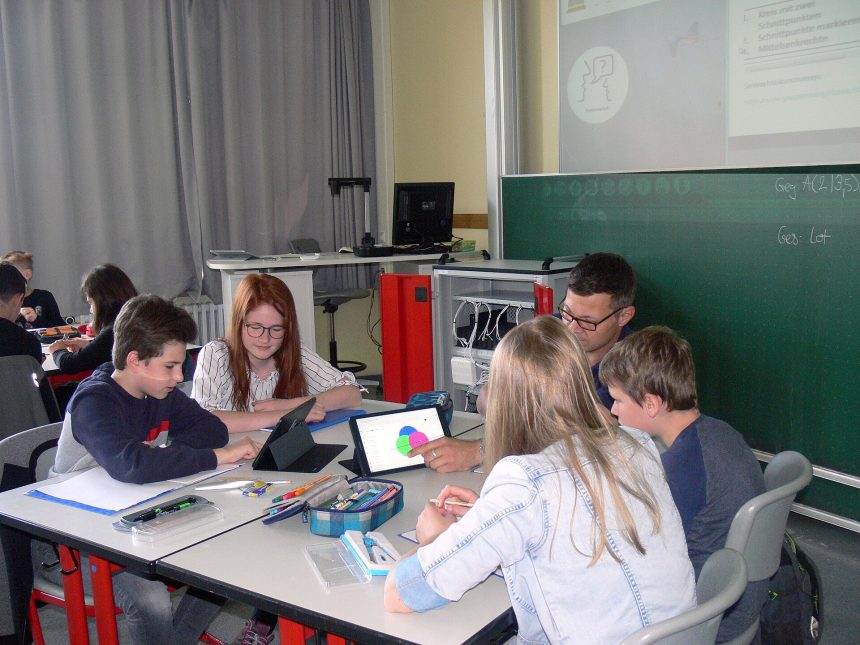
Teachers, initially the apps’ loudest sceptics, are finding a negotiated peace: many now assign app practice as homework’s engine while reserving class time for the conversation the apps cannot supply. It is a sensible division of labour — the game does the drilling it is good at, and humans do the talking only they can do.
The Bottom Line
Judged as habit technology, gamified apps are a triumph; judged as complete language courses, they are a beginning. The evidence supports a two-stage strategy: let the game build the daily practice and the first thousand words, then deliberately break the streak’s spell and go talk to humans. Play works — as the board game revival in our companion report also shows — when it serves the activity rather than replacing it.