

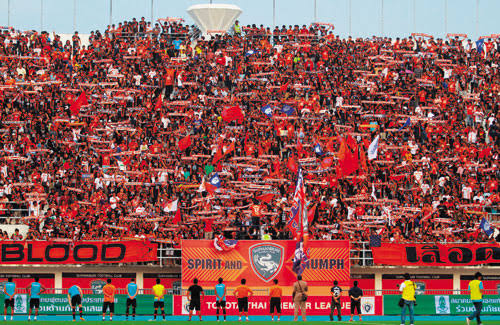
Integrating 2013 and 2014 Thai League fixtures into cross-league parlay slips required a methodical approach to risk distribution. While combining early-evening Southeast Asian kickoffs with late-night European matches offered continuous action across a single weekend, it also exposed slips to vastly different operational environments. The higher structural volatility, refereeing variance, and climate disruptions of the domestic league demanded distinct anchoring strategies to prevent regional unpredictability from ruining balanced, multi-tier combination tickets.
The Operational Logic of Cross-Timezone Parlay Construction
Bettors frequently constructed cross-league combination tickets to leverage temporal staging, allowing early-kickoff domestic matches to settle before major European fixtures began. When an early Thai League leg won, it generated positive psychological momentum and unlocked potential in-play hedging opportunities for late-night European slates.
However, treating Southeast Asian domestic matches as interchangeable with top-tier European leagues introduced significant structural risk. Top European competitions operated with higher tactical discipline, strict pitch maintenance standards, and deep statistical modeling, whereas the 2013/2014 Thai top flight featured elevated card rates, sudden monsoon downpours, and severe reliance on individual foreign stars. Balancing these leagues required treating domestic selections as volatile high-variance legs rather than stable ticket anchors.
Structuring the Core-and-Satellite Parlay Model
To avoid exposing an entire accumulator ticket to localized domestic variance, disciplined analysts deployed a core-and-satellite portfolio framework. Rather than stacking multiple uncertain Thai League spreads, the slip utilized mathematically stable selections from major leagues as the foundation, adding only one highly filtered domestic leg to boost the cumulative multiplier.
Cross-League Slip Architecture:
[Stable Core Leg 1: Premier League Asian Handicap] ──┐
├─► [Balanced Multiplier] ──► Target Payout
[Stable Core Leg 2: Bundesliga Total Goals Over] ───┤
│
[High-Edge Satellite: Thai League Underdog +1.5] ────┘
The hierarchical flow illustrated above demonstrates how risk is compartmentalized across disparate footballing environments:
- The foundation legs rely on high-liquidity, predictable European markets where team form and tactical execution exhibit low non-sporting variance.
- Market overrounds on these foundational fixtures remain tight, minimizing the compounding commission penalty across the multi-leg slip.
- A single Thai League fixture is incorporated as an asymmetric satellite leg, targeting a specific tactical mismatch or an inflated handicap line.
- The satellite leg provides the primary payout expansion, while the stable European core ensures the ticket is not destroyed by random domestic pitch or officiating chaos.
This structured division ensured that domestic market volatility was harnessed for upside rather than allowed to undermine the entire accumulator foundation.
Mechanics of Time-Staggered Hedging Execution
By deliberately scheduling the Thai League match in the early time slot and European matches in the late-evening window, a bettor created a sequential decision checkpoint. If the domestic satellite leg cleared successfully, the bettor secured significant mathematical leverage, allowing them to hedge the final European fixture on live market boards to guarantee a risk-free return.
Risk Profiling Across Domestic and International Competitions
Analyzing statistical variance across distinct football ecosystems highlights why cross-league combination slips required careful categorization of matchday variables.
| Competition Category | Liquidity & Market Efficiency | Non-Tactical Variance Impact | Average Foul / Booking Volatility | Optimal Parlay Role |
| Thai Premier League (2013/14) | Moderate to Regional | High (Weather, travel, pitch quality) | High (Elevated card & penalty rates) | Satellite Leg (High Spread Cushion) |
| English Premier League | Extremely High (Global Sharp) | Very Low (Standardized conditions) | Moderate (Predictable officiating) | Core Foundation (Asian Handicap) |
| German Bundesliga | High (Deep Analytics) | Low (Consistent pitch & pacing) | Low to Moderate (Structured pressing) | Core Foundation (Total Goals Lines) |
| Secondary Regional Cups | Low (Illiquid Boards) | Extreme (Heavy squad rotation) | Extreme (Disciplinary chaos) | Avoid (Excessive Parlay Risk) |
The comparative dimensions outlined in the table show that the 2013/2014 Thai League occupied a distinct middle ground, offering actionable pricing inefficiencies but carrying high environmental variance. Incorporating it alongside European leagues required assigning it a defensive role, such as backing an underdog with a wide Asian Handicap cushion.
Attempting to anchor a parlay on an outright Thai League away favorite consistently led to broken slips. The combination of long road travel and localized pitch wear created far more variance than found in elite European domestic competitions.
Eliminating Cross-League Correlation Pitfalls
A frequent failure mode in multi-league accumulators was the unintentional compounding of macroeconomic and schedule risks across competitions. Novice bettors routinely grouped heavy favorites across four different leagues on international matchweeks, ignoring how travel fatigue and national team call-ups degraded performance across all leagues simultaneously.
During the 2013 and 2014 campaigns, elite Thai clubs with extensive national team representations suffered noticeable performance dips immediately following regional international tournaments. Pairing an exhausted domestic powerhouse with an equally fatigued European Champions League contender doubled structural risk without offering any commensurate increase in odds.
Capturing Favorable Pricing Across Comprehensive Sportsbooks
Executing a balanced cross-league slip required an operator that offered deep international liquidity alongside competitive, localized Southeast Asian Asian Handicap boards.
In instances where a bettor sought to combine early Thai League handicap cushions with major European totals, analyzing line offerings across an expansive online betting destination proved essential. Placing balanced multi-league slips via the versatile interface of แทงบอล enabled participants to capture tight pricing margins across both domestic fixtures and major European markets, preventing excessive bookmaker overround from eroding the overall ticket value.
This unified market access allowed disciplined bankroll managers to build diversified combination tickets without sacrificing competitive price discovery on regional events.
Psychological Divergence Across Wagering Channels
Understanding how recreational capital moves across diverse gaming options offers valuable perspective on maintaining discipline in multi-leg sports wagers. Observing participant trends within an interactive casino destination shows that casual users frequently chase rapid-fire, high-multiplier outcomes without assessing underlying probability distributions.
This same impulsive drive often leads sports bettors to turn a sensible two-leg cross-league ticket into an unmanageable eight-leg mega-parlay by adding random late-night matches. Structured analysts resist this behavioral trap by treating cross-league tickets strictly as calculated risk-distribution exercises, capping combination slips at three highly vetted selections.
Critical Boundary Conditions: When Multi-League Combinations Fail
While combining leagues can optimize scheduling and spread risk, the framework breaks down entirely when applied during severe weather windows or congested holiday schedules. If heavy monsoon systems swept across central Thailand while winter storms disrupted European travel, environmental variance overwhelmed tactical analysis across every leg simultaneously.
Under such systemic external disruptions, cross-league parlays lost all predictive integrity. The mathematically optimal decision during severe multi-region weather events was to disband parlay structures entirely and revert to flat-staked single wagers on isolated, weather-immune fixtures.
Summary
Successfully balancing 2013/2014 Thai League fixtures with global competitions in multi-leg parlays required a disciplined core-and-satellite portfolio structure. High-liquidity European leagues provided a stable mathematical foundation, while carefully screened domestic fixtures acted as satellite legs targeting inflated handicap spreads. Bettors avoided failure by staggering kickoff times to enable hedging, eliminating shared international fatigue factors, and resisting the urge to over-expand slips into unmanageable accumulators during volatile weather windows.